Search this site
4 results found with an empty search
- Two Days, One Big Step: Western Sydney University Completes Standard Mental Health First Aid
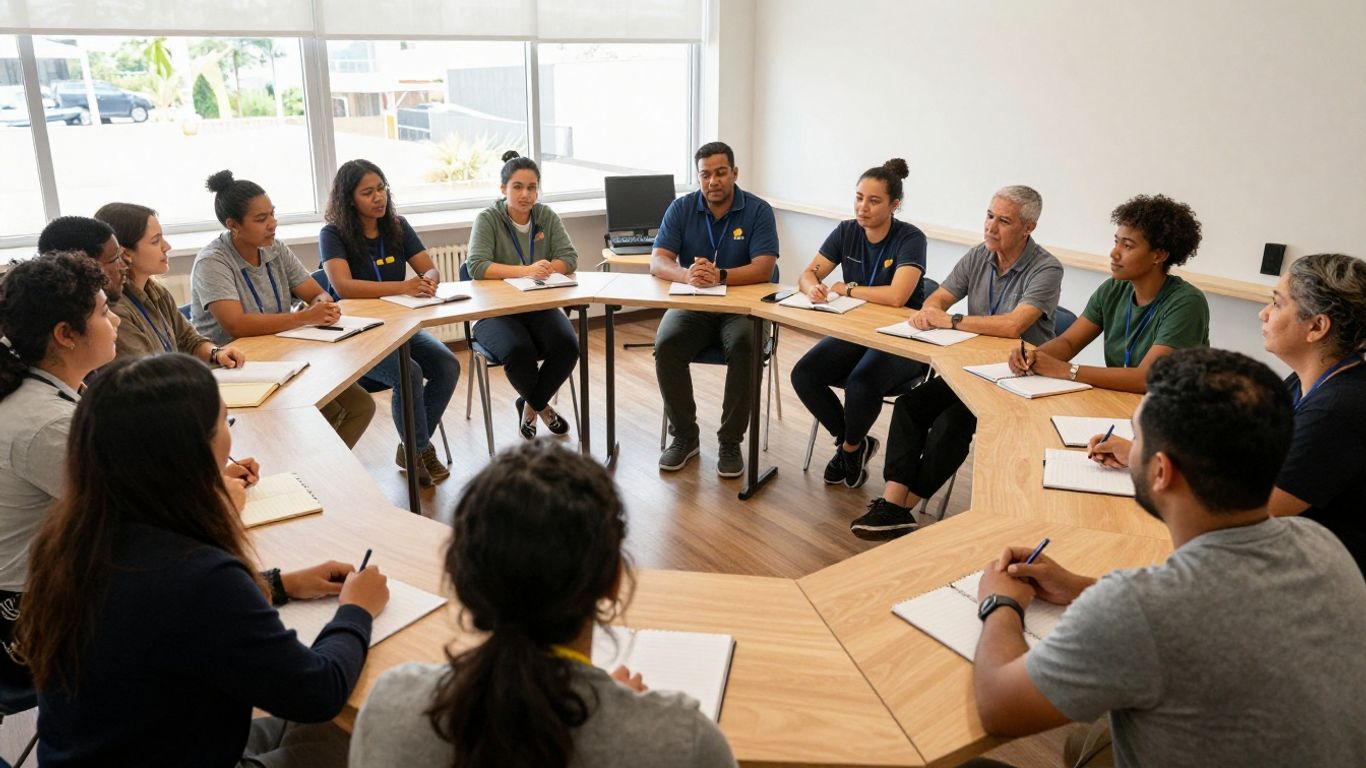
Western Sydney University staff with their certificates after completing the two-day Standard Mental Health First Aid course with Focused Mental Education. Over two days, a group of staff from Western Sydney University sat down together and did something that sounds simple but rarely is, they learned how to have the conversation most people avoid. Focused Mental Education recently delivered the Standard Mental Health First Aid course to teams at Western Sydney University. In the twenty-four hours that followed, twenty-two participants left five-star reviews. We are sharing some of them here, in their words, because they say more about the two days than we could. Why two days, and not two hours There is no shortage of one-hour mental health awareness sessions available to workplaces. They have their place. But awareness and capability are different things, and the gap between them is where most people freeze. Standard Mental Health First Aid is a 12-hour, evidence-based course accredited by Mental Health First Aid Australia. Delivered face-to-face, it runs as two six-hour days. That length is deliberate. It creates enough room to move past definitions and into practice, the part where participants actually rehearse what they would say, and discover how much harder it is than it looks on a slide. “The two day course was very well put together and he has made it a far more understandable course than what I was expecting for myself. I think his gentle approach whilst also being able to correct any misconceptions helps make the participants understand better.” — Namatai What the group covered The course is built around adults supporting adults. Across the two days, participants worked through the signs and symptoms of the mental health problems most likely to appear in an Australian workplace or campus: depression, anxiety, psychosis and substance use problems. It then moves into the harder territory, the crisis situations. Suicidal thoughts and behaviours. Panic attacks. Non-suicidal self-injury. The aftermath of a traumatic event. These are the moments where people most want to help and least know how, and they are given the time and care they deserve rather than a passing mention. “This training is incredibly worth the time. Difficult topics are covered with great detail and care.” — Victoria Underpinning all of it is the ALGEE action plan, the framework at the heart of Mental Health First Aid: • A — Approach the person, assess and assist with any crisis • L — Listen and communicate non-judgementally • G — Give support and information • E — Encourage the person to get appropriate professional help • E — Encourage other supports The value of ALGEE is that it gives people something to hold onto. When a colleague says something that stops you in your tracks, you do not need to improvise a response or diagnose anything. You need a sequence you trust, and the confidence to begin. “It provided practical knowledge and skills to recognise the signs of mental health problems, respond appropriately, and how to offer initial support to someone who may be experiencing a mental health crisis. I particularly appreciated the focus on listening without judgement, communicating effectively, and understanding when professional help is needed.” — Corine From knowing to doing The most valuable outcome of a Standard course is not that people learned a lot. It is that they walk out knowing what to say. That shift, from recognising that someone is struggling to actually opening the conversation, is the entire point. Plenty of people can spot the signs. Far fewer feel equipped to act on them, because the fear of saying the wrong thing is a powerful reason to say nothing at all. Two days of guided practice, discussion and realistic scenarios is what turns good intentions into a response someone can rely on. “Improved awareness and greater understanding of mental health issues and gained confidence in dealing effectively if approached with certain situations.” — Sunita “Damien is highly knowledgeable, I have loved the case studies, example scenarios shared as it has really hammered in the theory. I’ve learnt so much from this that I will use both personally and professionally.” — Tee That last point came up again and again over the two days, and in the reviews afterwards. People did not just leave better equipped at work. They left better equipped at home, with friends, and in the ordinary conversations that make up a life. “It gave me a lot of valuable and in-depth information on how to support people experiencing mental health challenges, how to approach difficult situations, and how to take care of myself as well.” — Silvia Participants who complete the course are accredited as Mental Health First Aiders for three years. Why this matters in a university Western Sydney University campus. Staff are often the first to notice when a colleague or student is struggling. Universities are dense, complicated communities. Academic and professional staff work alongside each other under real pressure, and they sit at the front line for a student population navigating the years in which mental health conditions most commonly emerge. A staff member is very often the first person to notice that something has changed. “One of the most informed courses I’ve ever done as a social worker in higher education space. Some great techniques to apply in real cases.” — Crystal By investing two full days in Standard Mental Health First Aid, Western Sydney University has put trained people into that community, people who can recognise what they are seeing, respond with confidence and connect someone to the right help before a difficult period becomes a crisis. “This course should be mandatory for everyone. All of us have mental health and having awareness of how to assist someone who may be in need is something we should all aspire to do.” — Natalee Damien Burke of Focused Mental Education presents Western Sydney University (Kingswood, NSW) with a Certificate of Recognition for its commitment to workplace mental health. Congratulations to everyone who took part. You showed up, you engaged with material that is not always comfortable, and you did the work. Bringing Mental Health First Aid to your organisation Focused Mental Education delivers accredited Mental Health First Aid training to workplaces, universities, community organisations and teams across Australia. Standard MHFA is available as a two-day face-to-face course, or in blended formats that combine self-paced eLearning with shorter facilitated sessions where two consecutive days is not practical. “I would recommend this training to all organisations that regularly interact with the general public.” — Charlotte If your organisation is ready to move from awareness to capability, we would like to hear from you. Get in touch: info@focusedmentaleducation.com.au
- Psychosocial Recovery Coaching vs Support Coordination: What's the Difference?
Key Takeaways Psychosocial Recovery Coaching and Support Coordination can both help an NDIS participant use their plan, but they support different kinds of progress. Psychosocial Recovery Coaching centres on recovery, wellbeing, confidence and day-to-day capacity. Support Coordination focuses on understanding, organising and using funded supports. The right choice depends on your goals, preferences, plan and current circumstances. Some participants may benefit from one service, while others may use both. A clear conversation about responsibilities can make your NDIS supports easier to navigate. Understanding NDIS Supports NDIS Supports are intended to help eligible participants pursue their goals and participate more independently in everyday life. The support that suits one person may not suit another, particularly when mental health, fluctuating capacity or major life changes are involved. Understanding the purpose of each service can make planning conversations more useful and less overwhelming. An NDIS plan may include several forms of assistance, and the role of each worker should be clear before services begin. Some supports are practical and coordination-based, while others focus more closely on recovery, skills, confidence and wellbeing. The distinction is not about one service being better; it is about whether the service matches the participant’s needs at that point in their journey. It is also worth checking how a proposed support relates to your plan and goals. Guidance about NDIS support categories can help participants understand how funding is structured, while an experienced provider can help translate broad goals into practical next steps. Your preferences, communication style and sense of safety matter just as much as the service label. What is Psychosocial Recovery Coaching? Psychosocial Recovery Coaching is an NDIS support for people whose disability is connected with mental health. It takes a recovery-oriented approach, recognising that progress can look different for every person and may not follow a straight line. The work can involve building confidence, strengthening daily living skills and supporting a participant to move towards personally meaningful goals. Key Responsibilities of a Psychosocial Recovery Coach A Psychosocial Recovery Coach works alongside the participant rather than taking over decision-making. Their role may include helping a person understand their strengths, identify barriers, practise strategies and build routines that support greater independence. Recovery-informed support should remain collaborative, respectful and shaped by the participant’s own priorities. Depending on the person’s goals, conversations may explore emotional wellbeing, relationships, community participation, self-advocacy or managing changes in daily life. Practical steps might be broken into smaller actions so that progress feels achievable. Common areas of focus can include: identifying personal strengths, values and recovery goals developing practical strategies for everyday challenges building confidence with communication and self-advocacy strengthening routines, relationships and community participation These responsibilities are not a substitute for clinical treatment or crisis care. Instead, coaching can sit alongside a participant’s broader support network, helping them apply useful strategies in daily life and maintain momentum between larger planning decisions. Who is Psychosocial Recovery Coaching For? This service may suit an NDIS participant with psychosocial disability who wants support to understand their recovery goals and build capacity over time. It can be particularly helpful when mental health symptoms fluctuate or when confidence has been affected by previous experiences with services, work, study or relationships. The participant remains at the centre of the process and decides what matters most. Focused Mental Education describes its Psychosocial Supports as tailored support for individuals with psychosocial disability under the NDIS, with a focus on daily functioning, resilience and recovery goals. That kind of support may be worth exploring when you want a practical, respectful space to work through goals at your own pace. A conversation about fit should happen before any commitment is made. What is Support Coordination? Support Coordination helps an NDIS participant understand and use the supports in their plan. The emphasis is generally on connecting the participant with suitable services, managing arrangements and building confidence in navigating the NDIS system. A Support Coordinator does not decide a participant’s goals for them; they help make the plan more workable. Key Responsibilities of a Support Coordinator A Support Coordinator may help a participant interpret their plan, understand available funding and connect with providers. They can also assist with organising services, resolving practical issues and reviewing whether arrangements are working well. The exact work will depend on the participant’s funding, goals and level of support required. Practical coordination can involve explaining options in plain language, helping prepare for service discussions and keeping communication moving between relevant people. It may also include support when circumstances change, such as a move, a change in informal support or a shift in goals. The central aim is to help the participant exercise choice and control while developing their own understanding of the system. Who is Support Coordination For? Support Coordination may suit someone who feels unsure about how to put their NDIS plan into action or who has several services to organise. It can also be useful when a participant is facing a transition, wants to compare service options or needs help bringing different parts of their support network together. The service is about coordination and capacity building, rather than providing therapy or replacing clinical care. The level of assistance should reflect what the participant actually needs. Some people may want help getting started and then gradually take on more tasks themselves, while others may need ongoing coordination because their circumstances are complex or change frequently. Clear boundaries at the beginning help everyone understand what the Support Coordinator will and will not do. Key Differences: Psychosocial Recovery Coaching vs. Support Coordination The two services can overlap in practical ways, but their primary purposes are different. Psychosocial Recovery Coaching is more closely connected with recovery, personal capacity and wellbeing, whereas Support Coordination is centred on implementing and managing an NDIS plan. Looking at the distinction can help you ask more useful questions of a provider or planner. The choice may not always be either-or. A participant could need help coordinating several providers while also working on confidence, routines or recovery goals. The key is to avoid paying for duplicated work and to make sure each person involved understands their role. Focus and Approach Psychosocial Recovery Coaching usually focuses on the participant’s recovery journey and the skills, strategies and confidence that support everyday life. Support Coordination usually focuses on the practical systems around a participant: providers, budgets, service agreements, plan implementation and communication. Both should be participant-led, but the conversations may feel quite different. This comparison can provide a starting point, not a rigid rulebook: Area Psychosocial Recovery Coaching Support Coordination Main focus Recovery, wellbeing and capacity building Plan implementation and service coordination Typical conversation Goals, strengths, routines and practical strategies Funding, providers, arrangements and plan processes Desired direction Greater confidence and independence in daily life Greater understanding and control of supports Relationship with other services Can complement clinical and community supports Can connect and organise different supports The table is a guide to the usual emphasis of each service. Individual providers may describe their work differently, so ask how the service will address your specific goals and how progress will be reviewed. NDIS Plan Integration Support Coordination has a direct relationship with implementing the participant’s NDIS plan, including understanding funded supports and arranging services. Psychosocial Recovery Coaching may also relate to plan goals, but its day-to-day work is more likely to involve recovery planning, capacity building and practical strategies. In either case, the participant should be able to see how the support connects with their plan. Focused Mental Education offers NDIS-focused mental health support and describes its approach as combining mental health education and therapeutic support. This approach aims to provide a holistic and integrated experience for individuals navigating their mental health journey within the NDIS framework. Where a participant is considering a service with a mental health focus, it is sensible to ask which component is being offered, how it fits within the plan and what outcomes the participant hopes to work towards. A therapeutic support option may be relevant to a different need, so the service description and funding arrangements should be checked carefully. Making the Right Choice for Your NDIS Journey Start with the difficulty you are trying to address, rather than the name of a service. If you need help organising providers, understanding your plan or managing service arrangements, Support Coordination may be the closer fit. If you want to work on recovery goals, confidence, routines or practical wellbeing strategies, Psychosocial Recovery Coaching may be more suitable. It can help to prepare a short list of questions before speaking with a provider. Ask what the worker does in a typical session, how they measure progress, how they communicate with other supports and what happens if your needs change. You can also ask whether the service is appropriate for your funding and whether there is a clear process for reviewing the arrangement. Your choice should feel safe, respectful and manageable. Focused Mental Education’s broader approach is built around practical, evidence-based learning and support, with seasoned professionals providing guidance for individuals and organisations. Whatever service you choose, informed consent, clear boundaries and genuine collaboration should guide the relationship. Conclusion: Navigating Your NDIS Supports Effectively Psychosocial Recovery Coaching and Support Coordination are distinct NDIS Supports with different main purposes. One generally centres on recovery and building personal capacity, while the other helps a participant understand and organise the supports connected with their plan. Both can contribute to greater choice and control when the role is clearly defined. The most useful decision begins with your own circumstances, goals and preferred way of working. Consider what you need help with now, what you would like to manage more independently and whether any existing services already cover the same ground. A careful discussion with your plan manager, provider or support network can clarify the next step. With the right support in place, NDIS planning can become more practical and less confusing. You do not have to identify the perfect arrangement immediately; services can be reviewed as your needs and goals develop. What matters is that the support remains relevant, respectful and connected to the life you want to build. Conclusion Choosing between Psychosocial Recovery Coaching and Support Coordination starts with understanding what kind of assistance will best support your goals, wellbeing and independence. With clear roles and an approach shaped around your circumstances, your NDIS supports can become a more confident and purposeful part of your journey. Frequently Asked Questions Is Psychosocial Recovery Coaching the same as Support Coordination? No. Psychosocial Recovery Coaching generally focuses on recovery, wellbeing and building personal capacity, while Support Coordination generally focuses on understanding and implementing an NDIS plan and organising services. Can a participant use both services? Some participants may use both where each service addresses a different need. The roles should be clearly explained so that work is not duplicated and the participant understands how the services fit together. What does a Psychosocial Recovery Coach do? A Psychosocial Recovery Coach works collaboratively with a participant on recovery goals, practical strategies, confidence, routines and capacity building. The work is shaped by the participant’s priorities and is not a replacement for clinical treatment. What does a Support Coordinator do? A Support Coordinator can help a participant understand their plan, connect with providers, organise supports and address practical issues affecting service delivery. Their role is to support choice and control, not to make decisions on the participant’s behalf. How do I know which service is right for me? Think about whether your main need is organising and understanding supports or working on recovery, confidence and daily capacity. Discuss your goals, funding and preferred approach with an appropriate planner or provider before starting. Are these services suitable for everyone with psychosocial disability? Suitability depends on the participant’s goals, plan, circumstances and preferences. A service should be considered individually, with attention to the type of support offered and how it connects with the participant’s needs. Can these supports replace mental health treatment? No. Psychosocial supports and coordination are different from clinical diagnosis and treatment. A participant should maintain appropriate clinical or crisis supports and discuss how services can work alongside them.
- What Is Mental Health First Aid Training? A Complete Guide
Key Takeaways Mental Health First Aid training gives people practical skills to recognise distress, offer initial support and encourage appropriate professional help. It is early support, not therapy or a replacement for clinical care. Training covers signs of mental health challenges, crisis response and the ALGEE action plan. The skills can be useful for individuals, families, workplaces and community groups. Good support begins with listening without judgement and respecting personal circumstances. Certification involves choosing a suitable course, completing the learning and keeping skills current. What is Mental Health First Aid Training? Mental Health First Aid training is a form of mental health support training that helps people respond when someone may be experiencing a mental health problem, crisis or period of significant distress. Like physical first aid, it focuses on the first response rather than diagnosis or ongoing treatment. Participants learn how to approach a person, listen safely and connect them with suitable support. The aim is to replace uncertainty with calm, informed action. The Core Principles of Mental Health First Aid The central principle is that a first aider offers initial help until appropriate professional support is available or the immediate situation has settled. This may involve noticing changes in behaviour, asking open questions, listening carefully and helping the person identify next steps. It also means understanding personal boundaries: a trained first aider is not expected to diagnose, counsel or manage a crisis alone. Respect matters throughout the conversation. A person may not describe their experience in clinical terms, and their culture, age, identity, history and circumstances can shape what support feels safe. Compassionate, practical support creates room for honesty without labelling or making promises that cannot be kept. Mental Health First Aid should sit alongside emergency services, healthcare professionals and trusted support networks. If there is immediate danger, urgent professional assistance is the priority; training helps a person recognise that need and respond rather than taking on responsibility beyond their role. Who is Mental Health First Aid For? This training can suit adults who want to know how to help someone with mental health issues in everyday settings. Parents, partners, friends, teachers, managers, community leaders and health-adjacent professionals may all encounter someone who is struggling. It is also relevant to people who want a clearer understanding of mental wellbeing and a more confident way to start difficult conversations. The best course choice depends on who you support and the situations you are likely to encounter. Someone working with teenagers may need youth-focused learning, while a workplace leader may benefit from examples that reflect staff wellbeing, psychological safety and referral pathways. A culturally responsive option can also help participants approach support with greater respect. For a broad Australian introduction, the Standard Mental Health First Aid course is described as a 12-hour programme covering common mental health issues, first aid strategies and guidance towards professional help. The learning is designed to build mental health literacy and confidence, rather than turn participants into clinicians. What Does Mental Health First Aid Training Cover? A mental wellbeing course Australia participants can use in real life usually combines information, discussion and practice. The content helps learners understand what they may observe, how to begin a conversation and when a situation calls for urgent assistance. It also encourages people to consider their own wellbeing while supporting someone else. The exact structure varies by provider and audience, but the purpose remains consistent: offer a measured first response, reduce stigma and guide people towards appropriate care. Training may use scenarios so that participants can rehearse language before they need it in a real conversation. Recognizing Signs and Symptoms of Mental Health Challenges Recognising mental health crises is not about collecting symptoms and assigning a diagnosis. It is about noticing meaningful changes, such as withdrawal, agitation, confusion, disrupted sleep, unusual communication or a loss of interest in ordinary activities. The learner considers what is happening for that person, asks rather than assumes, and stays alert to signs of immediate risk. A useful response is often simple and human. Introduce the concern gently, choose a private setting where possible and allow the person time to answer. Avoid minimising their experience or insisting that they explain everything at once. These habits support recognising mental health issues without turning a personal conversation into an interrogation. The ALGEE Action Plan ALGEE is a memorable framework for responding to someone who may need mental health first aid. It provides a sequence, but not a script that must be followed mechanically. A calm, respectful conversation still needs to reflect the person, the context and the level of risk. Training commonly explores these five actions: Approach the person, assess and assist with any crisis Listen and communicate non-judgementally Give support and information Encourage the person to get appropriate professional help Encourage other supports The framework is most useful when it guides attention rather than replaces judgement. In practice, a person may need immediate safety support before any longer conversation, or they may be ready to discuss professional care after being heard. The action plan helps the first aider keep both needs in view. Common Mental Health Conditions Addressed Mental Health First Aid courses may discuss common experiences such as depression, anxiety, panic, psychosis, eating disorders, substance use challenges and suicidal thoughts, depending on the course and audience. The emphasis is on recognising possible signs, responding safely and connecting the person with appropriate help. Content should never be used to label a friend, colleague or family member from a distance. The boundaries are especially important in conversations about suicide, self-harm or severe distress. A first aider should ask direct, caring questions when risk may be present, take disclosures seriously and seek urgent assistance when needed. Specialist learning, such as Conversations About Suicide, can provide additional practice for this topic, while a full Mental Health First Aid course offers broader coverage. The following distinction can help learners understand the role of training: Training focus What it helps a learner do What it does not replace Recognition Notice possible changes and signs of distress A clinical assessment or diagnosis Conversation Approach, listen and respond respectfully Therapy or counselling Crisis response Identify urgent risk and seek appropriate help Emergency or medical treatment Referral Encourage professional and community support A clinician’s care plan This keeps first aid for psychological distress in its proper place: an informed, compassionate first response that supports a person until more suitable care is available. Benefits of Mental Health First Aid Training The value of training is not limited to remembering a framework. It can make mental health conversations feel less intimidating and help people recognise when silence, avoidance or guesswork may be causing harm. With practice, participants can become more comfortable offering support while still respecting privacy, choice and boundaries. The benefits are strongest when training is part of a wider culture of care. A course cannot solve every mental health challenge, but it can give people a common language for responding and encourage earlier, more appropriate support. For Individuals For an individual, training can build confidence in starting a conversation and staying present when someone shares something difficult. It can also improve mental health literacy, making it easier to distinguish between ordinary stress, possible ongoing distress and a situation that needs immediate help. These skills may be useful at home, in study, at work or in community life. Participants also learn that supporting someone does not mean being available without limits. Self-care, consultation and referral are part of responsible first aid. A person who knows when to pause and seek help is often better placed to provide steady support over time. The learning can be particularly meaningful for people seeking practical skills rather than theory alone. At Focused Mental Education, courses and workshops combine mental health education, counselling and hypnotherapy, with programmes designed to be practical, engaging and immediately useful. The appropriate training should always match the learner’s role and the needs of the people they support. For Communities and Workplaces In a workplace or community group, shared training can make it easier for people to notice concerns and respond consistently. It may reduce stigma by replacing assumptions with informed conversation, while helping staff and volunteers understand available referral pathways. For organisations, the most useful approach is one that fits the group’s responsibilities, culture and likely situations. Workplace learning should complement, not replace, suitable policies, supervision, workload management and professional support. It can help a manager respond to a disclosure, but it does not make that manager a therapist or remove the organisation’s broader responsibilities for a safe environment. The practical benefits often build through small everyday actions: a kinder check-in, a better referral, a more thoughtful response to absence or a willingness to ask whether someone is safe. Those actions can strengthen a community without suggesting that one course can guarantee a particular outcome. How to Get Certified in Mental Health First Aid Start by deciding who you want to support and whether you need a general, youth, workplace or specialist course. Check the provider’s learning format, duration, assessment requirements and the type of certificate or accreditation offered. In Australia, a provider should also explain whether the course is delivered online, face to face or through a blended structure. The Blended Mental Health First Aid course is presented as training for supporting friends, family and others experiencing mental health challenges or crises. A blended option may suit learners who need flexibility, although the best format is the one that allows enough time for discussion, reflection and practice. After completing a course, keep the learning active. Revisit local support pathways, reflect on how you would respond to different situations and stay within the limits of your training. If an accreditation is approaching renewal, the MHFA Refresher course is described as a 4–5-hour option for people whose previous MHFA completion was within the last three years. Conclusion: Empowering Yourself and Others Mental Health First Aid training gives ordinary people a structured way to respond when someone may be struggling. It does not ask you to have all the answers; it asks you to notice, listen, respond to risk and help connect the person with appropriate support. That is a practical contribution, especially when fear or uncertainty might otherwise lead to inaction. The strongest learning combines evidence with compassion and real-world practice. It respects individual circumstances, recognises cultural differences and makes space for the first aider’s own wellbeing. These principles make the training useful across homes, workplaces, classrooms and community settings. Whether you are learning for personal confidence, professional development or a more supported organisation, choose a course that reflects your responsibilities. Knowledge becomes most valuable when it is applied carefully, with humility and a clear understanding of where professional help is needed. Conclusion Learning how to respond to mental health concerns can make difficult moments feel more manageable. With the right training, people can offer calm initial support, encourage professional care and contribute to communities where asking for help is met with understanding. Frequently Asked Questions Is Mental Health First Aid the same as mental health treatment? No. Mental Health First Aid teaches initial support, communication and referral skills. It does not replace assessment, diagnosis, therapy, medication or emergency care provided by qualified professionals. Who can complete Mental Health First Aid training? Many courses are designed for adults from varied backgrounds, including family members, community workers, teachers, managers and professionals. Always check the eligibility requirements and intended audience for the specific course. What does the ALGEE action plan mean? ALGEE is a framework for approaching, assessing and assisting in a crisis; listening without judgement; giving reassurance and information; encouraging professional support; and encouraging self-help and other supports. Can Mental Health First Aid help with a crisis? It can help a trained person recognise possible risk, communicate calmly and seek appropriate assistance. If someone is in immediate danger, contact emergency services or urgent professional support rather than trying to manage the situation alone. Does training teach people to diagnose mental illness? No. The focus is on recognising possible signs, responding respectfully and guiding someone towards suitable help. Diagnosis belongs to appropriately qualified health professionals. How long does certification last? The duration and renewal arrangements depend on the course and provider. Before enrolling, ask how long the accreditation remains current and whether a refresher course is available. How can I support someone after completing the course? Listen, ask what support they would find useful, respect their choices and encourage professional help where appropriate. Keep boundaries clear, protect privacy and seek further assistance when the situation is beyond your role.
- The Cost of Skipping Mental Health First Aid Training
The Real Cost of Not Investing in Mental Health First Aid Training in Australia (2026 Guide) Most businesses researching Mental Health First Aid (MHFA) training start with the same question: how much does it cost? It's a reasonable place to start, but it's the wrong question to stop at. Course fees are a known, one off, budgetable number. What's far harder to see, and far more expensive, is the cost of doing nothing. Poor mental health at work isn't a hypothetical risk that training might prevent. It's already happening, and it already has a price tag: in lost productivity, in workers' compensation claims, in staff turnover, in regulatory exposure, and in the everyday cost of people struggling through a workday because no one around them recognised the signs or knew what to say. Government inquiries, workplace regulators and independent economic analysis have all put real numbers on that cost, and this guide walks through what they actually say. We'll cover what mental ill-health costs the Australian economy overall, what it specifically costs employers through absenteeism, presenteeism and compensation claims, what the legal and compliance exposure looks like under current WHS psychosocial hazard laws, what it costs individuals and teams beyond the balance sheet, and what the research says training actually changes. We'll also put the cost of training itself into proportion against all of that, without naming or pricing individual providers, since actual course fees vary by format, group size, location and provider in ways a general article can't fairly represent. If you want a specific quote, the right move is to ask a provider directly. One more thing worth saying upfront: every figure in this article comes from a named government inquiry, a national workplace safety regulator, or peer-reviewed research, not from marketing material, and not from us. We've included the full source list at the end precisely so you can check the numbers yourself, or cite them directly if you're the one who has to make this case to a manager, a board, or a budget committee. What Poor Mental Health Already Costs Australia Every Year The most authoritative Australian source on this is the Productivity Commission's Inquiry into Mental Health, a two year national inquiry whose final report was released in November 2020. It remains the most comprehensive costing exercise done on this issue in Australia, and its headline figures are still the reference point used by government mental health portals today. The Commission split the cost into two categories. The first is the direct, measurable economic cost: healthcare spending, disability support, informal care provided by family and friends, lost taxation revenue, and workplace absenteeism and presenteeism. It put this at up to about $70 billion a year (more precisely, a range of $42.9 to $69.8 billion, depending on the specific costs included). The second, larger category is harder to see on a balance sheet: the cost of diminished quality of life and premature death for people living with mental illness, including those who die by suicide. The Commission valued this at $150.8 billion a year. Add the two together and the Commission's own combined estimate lands at roughly $200 to $220 billion a year, a figure it stated directly in its report overview. Cost Category Annual Cost to Australia Source Direct economic costs (healthcare, disability support, informal care, lost tax revenue, absenteeism/presenteeism) $42.9 to $69.8 billion Productivity Commission, Mental Health Inquiry Report, 2020 Diminished quality of life and premature death (incl. suicide) $150.8 billion Productivity Commission, Mental Health Inquiry Report, 2020 Combined total (Commission's own headline estimate) About $200 to $220 billion Productivity Commission, Mental Health Inquiry Report, 2020 Figures are the Productivity Commission's own reported estimates from its November 2020 final report (an earlier October 2019 draft report used lower, superseded figures; the numbers above are the ones to cite). To put a sense of scale on that: the Commission separately estimated that the reforms it recommended could unlock quality of life gains worth up to $18 billion a year, plus up to a further $1.3 billion a year from people with mental illness being able to participate more fully in the workforce. In other words, even a partial improvement in how Australia manages mental health, including at the workplace level, is worth billions, not thousands, in the Commission's own modelling. It's also worth noting how this figure has moved over time, because it tells its own story. An earlier draft version of the same inquiry, released in October 2019, used lower figures. By the time the final report was handed down in 2020, the costed impact had grown, not because the definition changed dramatically, but because the underlying problem had continued to compound. As the next section shows, the most recent workplace claims data suggests that trend hasn't reversed since. What It Costs Employers, Specifically The economy wide numbers above are useful context, but as a business owner or manager you're really asking a narrower question: what does this cost businesses like mine? The most cited Australian answer comes from a 2014 report PwC Australia prepared for beyondblue and the National Mental Health Commission's Mentally Healthy Workplace Alliance, titled Creating a mentally healthy workplace: Return on investment analysis. It's still the primary reference the Australian Government's own Mentally Healthy Workplaces portal points to today, more than a decade on. That tells you two things: the underlying problem hasn't gone away, and no more recent Australian study has supplanted it with fresh national modelling. The report broke the national cost of poor workplace mental health into three components: $4.7 billion a year in absenteeism (people away from work because of mental ill-health), $6.1 billion a year in presenteeism (people at work but functioning well below capacity because of it), and $146 million a year in compensation claims. Added together, that's commonly cited as more than $10.9 billion a year in costs to Australian workplaces, and that figure is now over a decade old, so it almost certainly understates the current cost given claim volumes have continued to rise since, as the next section shows. The anatomy of a single psychological injury claim National workplace safety data adds a sharper, more recent picture of what a single incident can cost. Safe Work Australia's most recent Key Work Health and Safety Statistics report found that mental health conditions accounted for 12.0% of all serious workers' compensation claims in 2023-24 (a preliminary figure), representing 17,600 claims, a 14.7% increase in claim numbers on the year before, and a 161.1% increase over the past decade. That's not a stable, background level risk. It's the fastest growing category of serious claim in the country. The cost per claim is where the comparison becomes stark. Using the most recent finalised year available (2022-23, since the newest year's claims are still being paid out and finalised), the median compensation paid for a mental health related claim was $67,400, against $16,300 for the median claim across all injury and disease types, more than four times higher. Time off work follows the same pattern: the median mental health claim in 2022-23 involved 35.7 working weeks away from the job, compared with 7.4 working weeks for all claims combined, almost five times longer. The most common causes of mental stress claims were workplace harassment or bullying (33.2%), work pressure (24.2%), and exposure to violence and harassment (15.7%). Measure Mental Health Claims All Injury/Disease Claims Share of serious claims (2023-24, preliminary) 12.0% (up 14.7% on the year before) n/a Median compensation paid per claim (2022-23) $67,400 $16,300 Median time off work per claim (2022-23) 35.7 working weeks 7.4 working weeks Source: Safe Work Australia, Key Work Health and Safety Statistics Australia 2025. Figures for claim share are 2023-24 (preliminary); compensation and time lost figures are 2022-23, the most recent year with sufficiently finalised claims data. Put plainly: one uncontested psychological injury claim can cost a business roughly four times what a typical claim costs, and take almost five times as long to resolve, before accounting for recruitment and retraining costs to cover the role, the strain on the rest of the team, or any reputational impact. Why the ROI math favours prevention This is the context behind the PwC report's other well known figure: a positive return on investment of 2.3 times the original input, meaning that for every dollar an employer spends on effective mental health action, the modelling found an average $2.30 gain back through reduced absenteeism, presenteeism and claims. That figure was modelled on roughly a one third reduction in those costs from taking meaningful action. It's an average across a range of interventions, not a guarantee tied to any single program, and no more recent Australian national study has re-run that modelling with current figures. Still, given that claim volumes and claim costs have both risen sharply since 2014, as the Safe Work Australia data above shows, there's little reason to think the underlying case for prevention has weakened. It's worth pausing on presenteeism specifically, because it's the least visible of the three costs and often the largest in dollar terms. Absenteeism shows up on a roster: someone isn't there, and someone notices. Presenteeism doesn't. It's the employee who's physically at their desk but operating well under their usual capacity: missed details, slower decisions, a shorter fuse in meetings, work that needs redoing. Nobody files a report for it, no claim gets lodged, and it's rarely captured in performance reviews as what it actually is. That's exactly why it's the harder cost to manage without deliberately building the capability to notice it. A manager or colleague who's been trained to recognise early warning signs is often the only real control measure standing between presenteeism and it becoming an absence, or a claim. The Legal and Compliance Risk of Doing Nothing Beyond the direct financial cost, there's a compliance dimension that's become considerably sharper in the last few years. Psychosocial hazards, things like excessive workload, workplace bullying, harassment, poor support and traumatic exposure, are now explicitly covered under work health and safety (WHS) law in the same way physical hazards are. Safe Work Australia's model Code of Practice: Managing psychosocial hazards at work (August 2022) and SafeWork NSW's equivalent state Code of Practice both set out a business's duty to identify psychosocial hazards, assess the risk they pose, and implement control measures: consultation, workload management, clear reporting pathways, training and support programs among them. What regulators actually expect It's worth being precise here rather than overselling the point: the Codes of Practice don't name “trained Mental Health First Aiders” as a specific, mandatory control measure. What they do require is that a business (a “person conducting a business or undertaking,” or PCBU) actively manages psychosocial risk through a genuine process: identifying hazards, consulting workers, and putting proportionate controls in place. Building internal capability to recognise distress early and respond appropriately is one of the practical ways businesses meet that broader duty, alongside things like workload monitoring, clear escalation pathways and access to support services. Framed accurately, training is a sensible, evidence-informed control measure within that system, not a legal box you can tick in isolation. The Codes of Practice follow the same general risk management logic used across all of WHS law: identify the hazard, assess the risk it poses, implement controls, and review whether those controls are actually working, then repeat, because psychosocial risk changes as a business grows, restructures, or goes through a difficult period. Treating this as a one off exercise (a single risk assessment, a single training session, filed away and not revisited) tends to satisfy the letter of the requirement poorly and the spirit of it not at all. A regulator reviewing your approach after an incident will be looking for evidence of that ongoing cycle, not a single historical action. The stakes for getting this wrong are not trivial. Under WHS penalty amounts effective from 1 July 2025, NSW's maximum penalties range from $748,492 for a body corporate on a general (Category 3) duty breach, up to $2,235,363 for a Category 2 breach that exposes workers to a risk of death or serious injury, and as high as $11,150,183 for the most serious Category 1 (reckless or grossly negligent) breaches, with individual officers facing penalties up to $2,318,844 and up to 10 years' imprisonment in the worst cases. Industrial manslaughter, in force since September 2024, carries penalties up to $20 million for a body corporate. These figures are indexed annually and will move again, so confirm the current amounts on Safe Work Australia's website before publishing rather than treating them as fixed. The scale of exposure is the point: psychosocial risk is now enforced in the same bracket as physical safety failures, not treated as a lesser concern. What enforcement looks like in practice This isn't just a law sitting on the books. SafeWork NSW announced in March 2026 that it had deployed 20 specialist psychosocial health inspectors to support workers and businesses on psychosocial risk. Separately, SafeWork NSW has already tested this framework through enforcement action: an improvement notice issued to the NSW Department of Education over psychosocial risk, stemming from a 2023 complaint, was upheld on review in 2026. Together, these show a regulator actively building specialist capacity and willing to issue and defend enforcement action in this area, not treating psychosocial risk as a lower priority than physical safety. For a business owner, the practical takeaway isn't to panic about penalty figures, it's to be able to demonstrate a genuine process if a regulator ever asks. That means being able to show how psychosocial hazards were identified in your workplace, how workers were consulted, what control measures were actually put in place, and how those measures are reviewed and updated over time. A one off training session with no broader risk management process behind it wouldn't satisfy that standard on its own, but a documented process that includes training as one of several deliberate controls is a materially stronger position than having nothing in writing at all. Why This Matters Even More in Mental Health, Disability and Community Services The figures above are averages across the whole Australian economy, but risk isn't evenly distributed across industries. Roles that involve sustained emotional labour, exposure to other people's trauma or crisis, high caseloads, and genuine care about outcomes for vulnerable people carry a different psychosocial load than a typical office role. That description covers a large part of the mental health, disability and community services sector, including NDIS support work, counselling, allied health and frontline case management. Vicarious trauma, compassion fatigue and burnout are recognised occupational risks in these fields specifically because the work itself is the exposure, not an occasional workplace incident, but a cumulative one. For organisations operating in this space, the general workplace case above isn't a distant statistic to acknowledge and move past, it's a closer description of the actual working environment than it would be for a typical desk based industry. That has two practical implications. First, the psychosocial hazard identification and control measure process the Codes of Practice require isn't a generic compliance exercise here; it needs to genuinely account for the emotional demands specific to care and support work. Second, the people best placed to notice a colleague struggling, and to have that first supportive conversation before it becomes a claim, a resignation, or a crisis, are usually other people doing similar work, which is exactly the capability Mental Health First Aid training is built to develop. The Cost to Individuals and Teams, Not Just to a Balance Sheet It's easy for figures this large to feel abstract, so it's worth translating them back to what they actually represent: people. The Productivity Commission's report breaks its economic modelling down further, and two components are directly about people staying in or leaving the workforce. Lower workforce participation linked to mental ill-health was costed at $12.2 to $22.5 billion a year: people who want to work, or want to work more, but can't sustain it without support. Informal care, the unpaid time family members and friends spend supporting someone through a mental health crisis, often instead of their own paid work, was costed separately at $15.3 billion a year. For a team, this shows up in ways that don't always get labelled correctly: the colleague who's quietly struggling and starts making uncharacteristic mistakes, the manager who avoids a difficult conversation because they don't know what to say and watches the situation get worse, the good employee who resigns rather than raise what's actually going on. None of that appears as a single line item, but it's the everyday texture of the national figures above. Stigma is a large part of why it goes unaddressed. People are often reluctant to disclose a mental health difficulty at work, or don't recognise the early warning signs in themselves or others, until a situation has already escalated to crisis point. There's also a compounding effect worth naming: unmanaged psychosocial risk doesn't stay contained to the person experiencing it. A team member covering for a colleague's extended absence carries extra load, which raises their own risk. A manager who has watched one difficult situation handled badly becomes more anxious about the next one, and more likely to avoid it too. Left long enough, this pattern doesn't just cost the business through one claim, it shapes the culture, and cultures that avoid difficult conversations tend to keep generating the same problem. Does Training Actually Change Any of This? What the Evidence Shows It's a fair question, and one worth answering with real evidence rather than assumption. MHFA Australia, the licensing body for the accredited Mental Health First Aid program, maintains a public research and evaluation register of the peer-reviewed studies behind the program, spanning workplace, education, university and community settings. One of the more directly relevant Australian evaluations, published in BMC Psychology by Bond, Jorm, Kitchener and Reavley (2015), assessed MHFA training delivered to Australian medical and nursing students across both face-to-face and online formats. It found statistically significant improvements in participants' mental health knowledge, their confidence in their ability to help someone experiencing a mental health problem, and their stated intentions to actually provide that help, alongside a measurable reduction in stigmatising attitudes and desire for social distance from people with mental illness. 91% of participants in both delivery formats rated the course as well structured, and enjoyment ratings were high in both the online (85%) and face-to-face (88%) groups, which matters for whether people actually retain and use what they've learned. The broader pattern across the MHFA research base is consistent with that single study: trained participants become measurably more knowledgeable, more confident, and more willing to act. To check in with someone, have the conversation, and point them toward appropriate support, rather than staying silent because they don't know what to say or fear making things worse. That's precisely the gap sitting behind the absenteeism, presenteeism and claims figures above: problems that go unnoticed or unaddressed for longer than they need to, because no one nearby felt equipped to respond early. This is really the mechanism connecting the evidence to the dollar figures earlier in this article. A claim doesn't usually start as a claim, it starts as a person struggling, often for weeks or months, before it escalates into something that shows up in the compensation data. The 35.7-week median time off for a mental health claim reflects how far things had typically progressed by the point a claim was lodged. The genuine value of training isn't that it prevents every difficult situation, nothing does, it's that it shortens the gap between someone struggling and someone noticing and responding, and that gap is where a large share of the cost above actually accumulates. So, What Does Training Itself Cost, In Proportion? Given everything above, it's worth being upfront about the other side of the equation. Accredited MHFA course fees in Australia vary meaningfully by format, group size, location and provider. A short online refresher typically sits toward the lower end of a couple of hundred dollars, while a full face-to-face standard course for a group tends to sit higher, and pricing structures differ enough between providers (some bundle manuals and certificates, others charge separately; some offer not-for-profit or concession rates) that quoting a single national figure would be misleading. We'd rather you get an accurate, current quote for your actual situation than rely on a generic number here. What's genuinely useful is the comparison, not the exact figure: even a full round of training for a team is a modest, predictable, one off cost set against a median psychological injury claim of $67,400 and 35.7 weeks of lost work, or against WHS penalties that now run into the hundreds of thousands to millions of dollars for a serious breach. Training doesn't eliminate risk, nothing does, but as one control measure within a genuine psychosocial risk management approach, it's a proportionate response to a cost that, on the evidence above, is already being paid whether or not anyone chooses to act on it. It's also worth thinking about training cost as a per person, ongoing figure rather than a single headline number. Certification is generally valid for around three years before a shorter, cheaper refresher is needed, which means the real annual cost per trained staff member, averaged out, is considerably lower than the up front course fee suggests. Compared against a claim, a resignation, or a regulatory penalty, each of which can occur at any time and without warning, a known, budgetable, recurring training cost is a far easier number for a finance team to plan around. Making the Business Case Internally: A Simple Framework If you're the one who needs to justify this investment to a leadership team, budget committee, or board, these are the questions worth having answered. They map directly onto the cost categories covered above. Bringing genuine numbers to this conversation, even estimates drawn from your own claims history or staff turnover data, tends to land far better than a general appeal to wellbeing, not because leadership doesn't care about wellbeing, but because a concrete cost comparison is what actually gets a line item approved in a budget cycle. 1. What has psychological injury actually cost us, or a comparable business in our sector, in the last two to three years, in claims, lost time, recruitment, and management time spent on unresolved conflict or performance issues? 2. What would even one avoided claim be worth, given the median cost and time off figures above, and how does that compare to the cost of training our people? 3. Where are our psychosocial risk gaps right now, whether that's workload, unclear reporting pathways, or a manager cohort that's never been trained to recognise or respond to distress, and does our current approach genuinely address them, or just exist on paper? 4. If a WHS regulator reviewed our psychosocial risk management approach today, could we point to a real, documented process (hazard identification, consultation, proportionate controls), or would we be starting from a standing start? 5. Who in our organisation is actually equipped, right now, to notice early warning signs and have a supportive first conversation, and what happens if that person is on leave or has left? 6. What's a realistic, phased way to build this capability, starting with managers and team leads for instance, rather than trying to train everyone at once? Working through these six questions with real numbers from your own organisation, even rough ones, tends to make the business case for itself. The figures above are national averages, but the same pattern, a small, controllable training cost against a much larger, largely uncontrolled downside, holds at the individual business level too. Frequently Asked Questions How much does Mental Health First Aid training actually cost? It depends on format, group size, location and provider, and reputable providers price these differently enough that a single figure would be misleading. As a general guide, refresher courses tend to be the least expensive option and full standard courses the most, with blended online formats often sitting in between. The most reliable way to budget is to request current quotes from two or three accredited providers for your specific group size and format. Is mental health training legally required for Australian businesses? Not as a specific named requirement. No law mandates Mental Health First Aid training by name. What is legally required, under WHS law and the psychosocial hazards Codes of Practice, is that businesses actively identify and manage psychosocial risk, in consultation with workers, and put proportionate controls in place. Training is a widely used and evidence-supported way to help meet that broader duty, not a mandatory line item in isolation. What's the actual return on investment for workplace mental health initiatives? The most cited Australian figure comes from a 2014 PwC report prepared for beyondblue and the National Mental Health Commission, which modelled an average positive return of $2.30 for every $1 spent on effective workplace mental health action, based on reductions in absenteeism, presenteeism and compensation claims. It's an average from national modelling rather than a guarantee for any specific program, and it hasn't been re-modelled with more recent figures, but no more current Australian study has replaced it as the reference point. How long does Mental Health First Aid certification last? MHFA Australia states that accreditation is valid for around three years, after which a shorter refresher course brings it current again. Confirm the exact validity period with your training provider, as it can be updated. Does this apply to small businesses too, or just large employers? The WHS duty to manage psychosocial risk applies regardless of business size. There's no employee-count threshold that exempts a smaller business. In practice, smaller teams often have less redundancy to absorb one person's extended absence, which can make the cost of an unmanaged psychological injury claim proportionally more disruptive, not less. What's the difference between Mental Health First Aid Australia and Mental Health Foundation Australia? Mental Health First Aid Australia (mhfa.com.au) is the official body that licenses instructors and owns the accredited Mental Health First Aid course and certification. This is the program most workplace policies and industry bodies mean when they specify MHFA training. Mental Health Foundation Australia (mhfa.org.au) is a separate, unrelated charity that runs its own similarly named course. If your workplace, industry body or funding arrangement specifically requires the nationally recognised MHFA Australia program, it's worth confirming which organisation is actually accrediting the course you're booking. The names are close enough to cause genuine confusion. Where do these figures come from, and can I use them internally to build a business case? Yes. Every figure in this article is drawn from named government and research sources (the Productivity Commission, Safe Work Australia, SafeWork NSW, and peer-reviewed research), listed in full in the Sources section below, so you're welcome to cite them directly in an internal proposal or budget submission. Is this only relevant to large corporates, or does it apply to NDIS and community service providers too? If anything it's more relevant. As covered above, roles involving sustained care work, crisis exposure or high caseloads, much of the NDIS and community services sector, carry a higher psychosocial load than the economy wide averages these national figures are drawn from. The same legal duty to manage psychosocial risk applies regardless of whether you're a large registered NDIS provider or a small community organisation. What's the first practical step if we haven't done any of this yet? Start with an honest hazard identification exercise. Ask your team, formally and informally, where the pressure points actually are, rather than starting with a training purchase. That process will tell you whether training, workload changes, clearer reporting pathways, or some combination is the right first control measure for your specific situation, and it also creates the documented starting point a regulator would expect to see. Talk to Us About Building This Capability in Your Team If the case above resonates with where your organisation is at, the next step is a conversation, not a spreadsheet. Get in touch and we'll talk through your team's size, current risk profile and what a practical, phased rollout of Mental Health First Aid training could look like, with a proper quote based on your actual situation, not a generic number. We work with workplaces, community organisations and NDIS providers across Australia, and we're happy to start with a straightforward conversation about where your organisation is at right now. No obligation, and no pressure to buy a course you don't actually need yet. Sources 1. Productivity Commission (2020). Mental Health, Inquiry Report No. 95. pc.gov.au/inquiries-and-research/mental-health/report 2. Productivity Commission (2021). Mental Health, overview and reform benefits. pc.gov.au/media-speeches/speeches/mental-health 3. PwC Australia, for beyondblue and the National Mental Health Commission (2014). Creating a mentally healthy workplace: Return on investment analysis. pwc.com.au/publications/pdf/beyondblue-workplace-roi-may14.pdf 4. Mentally Healthy Workplaces, Australian Government (accessed 2026). Creating a mentally healthy workplace: Return on investment analysis. beta.mentallyhealthyworkplaces.gov.au/explore-resources/creating-mentally-healthy-workplace-return-investment-analysis 5. Safe Work Australia (2025). Key Work Health and Safety Statistics Australia 2025. data.safeworkaustralia.gov.au 6. Safe Work Australia. Psychological health and safety, data insights. data.safeworkaustralia.gov.au/insights/hazards-and-injuries/psychological-health-and-safety-workplace 7. SafeWork NSW. Code of Practice: Managing psychosocial hazards at work. safework.nsw.gov.au/resource-library/codes-of-practice/codes-of-practice/managing-psychosocial-hazards-at-work 8. Safe Work Australia (2022). Model Code of Practice: Managing psychosocial hazards at work. safeworkaustralia.gov.au/doc/model-code-practice-managing-psychosocial-hazards-work 9. SafeWork NSW. Increases to penalty provisions from 1 July 2025. safework.nsw.gov.au/legal-obligations/legislation/accordians/increases-to-penalty-provisions-from-1-july-2025 10.SafeWork NSW. Work Health and Safety Amendment (Industrial Manslaughter) Act 2024. safework.nsw.gov.au/legal-obligations/legislation/accordians/work-health-and-safety-amendment-industrial-manslaughter-act-2024 11.SafeWork NSW (March 2026). New mental health safety inspectors now supporting workers and businesses. safework.nsw.gov.au/news/safework-media-releases/new-mental-health-safety-inspectors-now-supporting-workers-and-businesses 12.MHFA Australia. Research and evaluation. mhfa.com.au/about-us/research-and-evaluation/our-research 13.MHFA Australia. Refresher courses. mhfa.com.au/our-courses/courses-for-current-mhfaiders/refresher-courses 14.Bond, K.S., Jorm, A.F., Kitchener, B.A., and Reavley, N.J. (2015). Mental health first aid training for Australian medical and nursing students: an evaluation study. BMC Psychology, 3, 11. link.springer.com/article/10.1186/s40359-015-0069-0